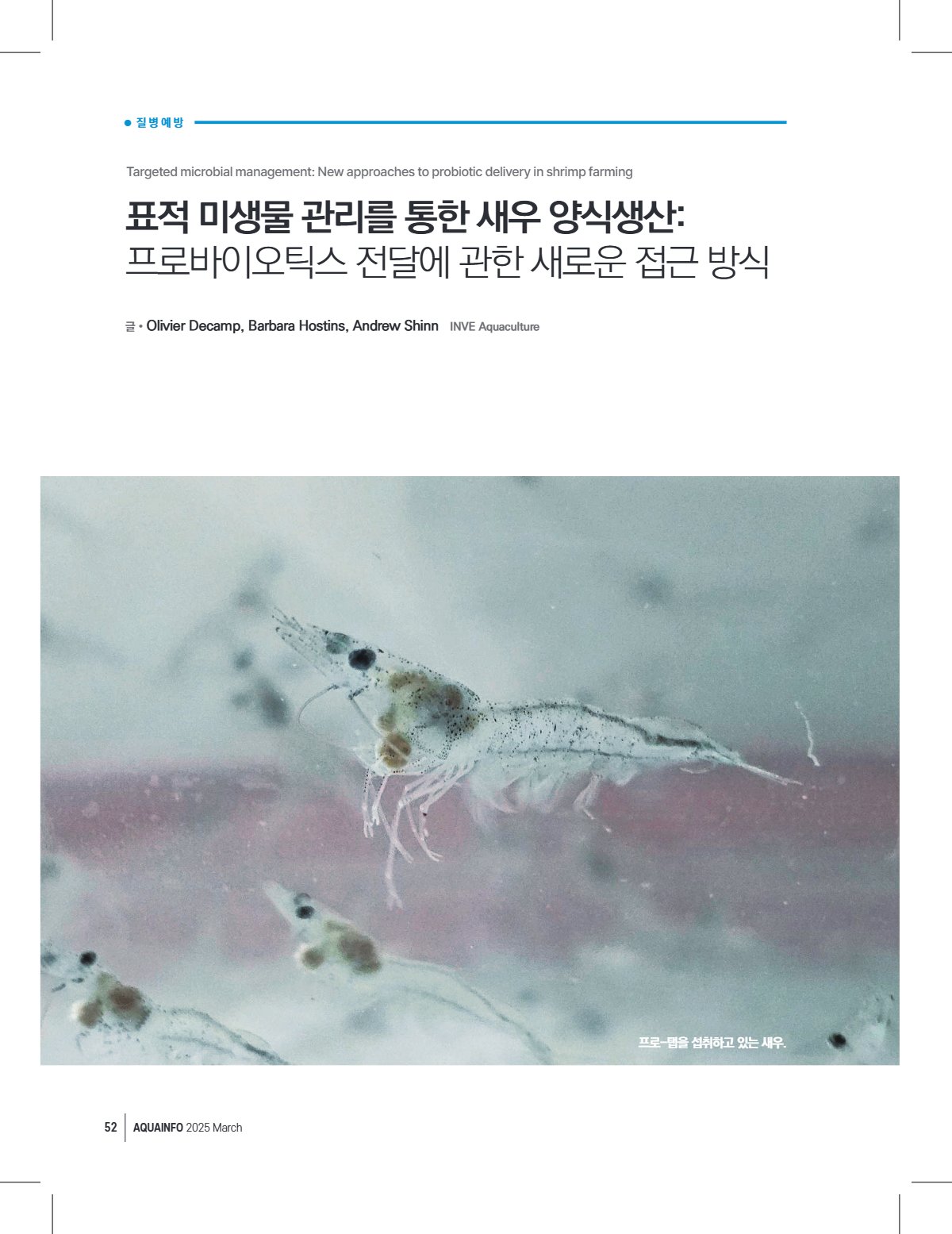
Effective microbial management in shrimp aquaculture is critical for crop success and disease prevention against major pathogens such as Vibrio species, Acute Hepatopancreatic Necrosis Disease (AHPND), Translucent Postlarvae Disease (TPD), and White Faeces Syndrome (WFS). Gut microbiota plays an essential role in nutrient absorption, immune response, and disease resistance. Probiotics typically reach the shrimp gut via environmental uptake from bioflocs or water, standard formulated feeds, or alternative non-nutritional matrices. However, during stressful conditions or early disease onset, shrimp frequently exhibit anorexia and decreased feeding activity, rendering standard medicated or top-dressed feed ineffective. To address this limitation, innovative probiotic delivery using highly attractive, palatable non-feed carrier matrices enables targeted delivery and ingestion by exploiting natural grazing behavior. Combining routine water quality and pathogen monitoring, biosecurity, and stage-specific probiotic application across hatchery, nursery, and grow-out phases ensures optimal gut colonization, suppresses opportunistic pathogens, and enhances shrimp survival and productivity.